Wednesday, 16 June 2010

Rage Against the Dying of the Light


My internet connection has been down, and so I have not posted for a little longer than I really intended: for this I apologies. This will be a quick post (not related to my series on cuts-hopefully a new post on Friday) about something which came up when I was watching Monarchy with David Starkey. In 1604 King James the VI of Scots and I of England made a speech before the English Parliament outlining his belief on why the nation of his birth and his adopted home (he would visit Scotland only once after 1603) should be joined in political union: a shared language, culture, customs, religion and linked geographical border all meant that the continual independence of his northern kingdom was an anomaly left over from the age of Bruce-at least in the eyes of the ‘wisest fool’.

Obviously James failed to create a British union during his reign, but the same arguments heard in the English Parliament in the 1600s and in the Scottish Parliament in the 1700s are being reiterated by the forces of unionism today. Now I first joined the nationalist cause because I saw it as the only method by which an independent Scottish identity could be salvaged from the hell of tartan tat; for the same reasons as James VI a Westminster government would never more than make a show of protecting the ancient identity of the northern kingdom. However, the light came upon me watching Starkey talking about the politics of the Jacobean regime-the same reason that drove me toward nationalism (namely the slow death of the national identity) is driving many of my fellow Scots toward the cold embrace of British ideologues. Sadly our national character has degraded to the point where only those who spend their lives surrounded by the memories of the dying culture of my people can form enough energy to raise a hand in defence of old Alba, and this is something I think the nationalist movement needs to rectify. Not only will the Renaissance of the Gaels be a brilliant epoch in our history in its own right, it shall inspire the Scottish people to rise up and defend our ancient identity from lethargy. Once this occurs the march to independence will be assured.

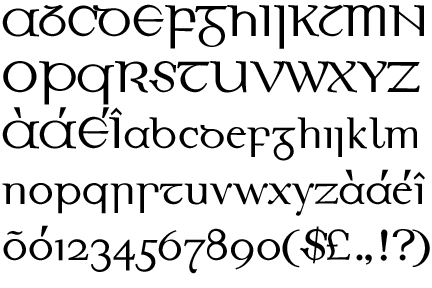
I believe we should practice what we preach. As such I intend to work away at learning Gaelic and promoting Scottish culture and customs. I shall report throughout the year on how I am progressing, and encourage all my nationalist companions to attempt to ‘Gaelify’ their own lives in their own way.

Saturday, 12 June 2010

The Big Conversation-Last of the Raj


The Cameron/Clegg team have decided that there should be a national conversation on where the cuts (and, we assume, the taxes) will fall. In that spirit I intend to publish a series of posts contributing to that national conversation. Here is instalment one-entitled ‘Last of the Raj’.

With the advent of the Scottish Parliament the Scottish Office was left with very little to do, and now with the new Coalition committed to devolving more powers to the said parliament, the Office is in danger of becoming devoid of all purpose. And yet this particular arm of the government continues to leech £7.2 million (as of June 2009: http://news.scotsman.com/politics/Costs-at-Scotland-Office-39out.5386463.jp) from the taxpayer. I say the Scottish Security should be removed, and all powers reserved for the Scottish Office be devolved to the Scottish Government. A fairly easy saving which harms no-one but Michael Moore and David Mundell.

Of course the Welsh Office and NI Office should follow on the heels of the Scottish Office: give more powers to the regions and cut back on the costs of these last vestiges of colonialism. This would empower the local executive, as well as save millions.

Thursday, 3 June 2010

For What Do We Fight?


The SNP has failed. Unionism is not a credible ideological force, and yet nationalism has not achieved the dream of an independent nation. Whereas the national cause is championed by the one party, Unionism has no clear rallying point, no field marshal on whom to rely to direct the grand campaign. Like the Napoleonic armies in the Iberian peninsula, the parties of Union are divided between many generals who are more interested in political point-scoring than any real concerted effort to eradicate the ‘nationalist menace’. Yet the Union flag still flies above Edinburgh Castle: Where is the SNP’s Vitoria?

Unlike Wellington, the party has failed to use the divisions in the enemies ranks to its advantage. The reason behind our woeful lack of success in the field is simple: the nationalist cause is as divided as that of the Union. Some in the national party support the Conservatives in all but one regard: the Scotland question. Others have ideological sympathies with the Liberals, and yet more find affinity within the trade unions or the Greens. The leadership is as divided as the rank and file, and even if this were not the case an SNP leader would never dare set clear ideological policy for the party for fear of watching Scotland’s best hope split asunder. And so the SNP continue to mount charge after futile charge against Unionist cannon, creating an Austerlitz where we could have a Waterloo.

Students of history, I ask you to think back to any and all successful independence movements or revolutionary ideologues (for what is nationalism but a revolution against the British constitutional make-up?) What do they all share? What binds them together? Clear ideological opposition to the ancient regime. The American Revolutionaries had no cultural identity with which to unite dissident, and yet they achieved the unimaginable and drove the most powerful nation on earth from one of her primary colonies. This did not happen through British bad luck alone, but instead it was combined with a clearly defined alternative to Hanoverian rule laid down in the Declaration of Independence. The Covenanting Revolutionaries defeated Anglo-royalist forces by uniting the opinionated Presbyterians behind the National Covenant. The Irish nationalists had their Catholic faith and cultural identity. Even the medieval Scots had their Declaration of Arbroath. The clear pattern is that nationalism only becomes a successful political force once it has a clear ideological alternative to Unionism.

Many of my readers will no doubt object to my proposal: surely this move can only lead to the split in the nationalist vote? Well we have two options, dear reader: carry on as we are, muddling along until the end of time; or we can risk the split in the SNP-and achieve the dream of sending Murphy to his very own Elba!

Tuesday, 1 June 2010

Israel and the Double Standard


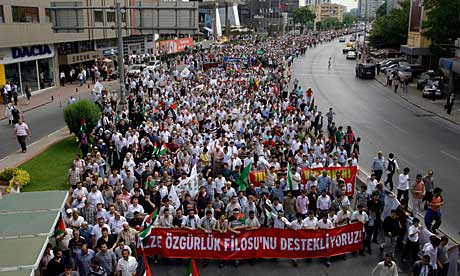
Israel has recently committed a new transgression against the international community by attacking a civilian boat in international waters. The boat was full of protesters intent in braking the siege on Gaza, and so was fair game in the minds of the Israeli Defence Force (IDF). More information can be found at http://www.guardian.co.uk/world/blog/2010/may/31/israel-troops-gaza-ships

At the moment Israel is only allowing its version of events to be heard (journalists having been blocked from achieving full access to the injured protesters), but even if the IDF prove to be entirely within their rights on this matter (that would be a first) the international reaction highlights a double standard in relations. Imagine that it had been Iran, or Hamas, or Saudi Arabia, or Cuba, or Russia, or any other country that you care to think about had performed the same action that the IDF has recently pulled off. What would be the international reaction? Almost certain condemnation followed by swift diplomatic action and perhaps even sanctions. However, when Israel attacks civilians in international waters the Obama administration is ‘working to understand the circumstances surrounding the tragedy’. Similarly weak and non-offensive remarks can be heard in most Western Foreign Offices. Even although 9 people have been killed by an aggressive military not in its own waters the governments of ‘the West’ are paralysed with an indecision which they simply do not show to any other nation on earth-or at least not to the same level. Are victims of Israeli bullets any less dead? Are Israeli wars any less illegal (this is illegal by Israeli as well as international law)? Of course not. European and American governments must end the double standards: once Israel is treated like any other nation a proper peace process can begin.

Wednesday, 26 May 2010

House of Lords Reform


I was appalled when I learned that the new Coalition government are going to attempt to turn the House of Lords into an elected Senate. So strongly do I feel about this travesty that I was compelled to send letters off to various members of Parliament (both Opposition and Government as well as the Lords). Below readers can find a copy of this agitation. I think it summarises my argument quite well, and I would be interested to read the opinion of anyone who happens to be passing through this section of the blogosphere.


An academic’s first duty is to their subject, and a bishop’s to God. Both roles can be found within the House of Lords, but does the value of these individuals as legislators diminish because of their devotion to their chosen field? Almost certainly not; in my own modest opinion quite the reverse is true; by first serving science, or philosophy, or whatever other subject may be represented in the Upper Chamber, peers such as Martin Rees, President of the Royal Society, can bring expertise and a unique insight to a prospective law which would have been lost if he had been a politician alone. No matter how intelligent an MP may be, they simply cannot keep abreast of current developments in their past field as well as fully serving their constituents and going through the rigors of re-election every four or five years. This, of course, does not devaluate the hard work of our MPs, but it does highlight the need for independent life peers in the House of Lords who can scrutinise and debate Bills in a way which the House of Commons cannot hope to emulate.

I am not advocating that the House of Lords does not need to be reformed, but I feel that the creation of a wholly elected Senate would be pure folly; the great tradition of highly qualified independent peers would be lost, and this would be a dismal development for the national character: I find it hard to imagine Lord Rees standing in an election at the expense of scientific enquiry, and it would be incompetence in the extreme to force such peers to choose between the love of their country and the love of their subject; there seems no sane reason why the two cannot be reconciled.

I hope that I have clearly expressed my view on this subject, and I hope that you shall at least consider this view before voting on any legislation which may change the nature of our upper house.

And so ends my political agitating, at least for the moment!

Friday, 21 May 2010

Should the Monarchy Stay or Go?


What are my views on the Queen? There are various people within the nationalist community who believe that an independent Scotland (or a united Britain) should be a republic. The argument goes that the common people should be able to elect their head of state, but this I see as quite pointless. For instance, let us just imagine that Britain became a republic. In the British system at present the Queen acts as our head of state, and so it must be concluded that any elected official would perform similar functions: real power would still reside with the Prime Minister and Parliament with the President used as a figure head with limited constitutional powers. We would have a republic which would almost definitely be closer to the Indian or Polish model rather than the American one, and as such we would be replacing a monarchical figure-head with an elected figure-head.

Now if we conclude that the only difference between a monarchical Britain and a republican one is another election every 4 years or so, then from a philosophical perspective it must be concluded that there must be something special about electing our head of state or there would be no point in replacing the Queen. I would argue that this is not true. Although democracy in the Lower House is preferable to some kind of dictatorship, I would argue that an elected President merely adds extra cost (elections cost money) and uncertainty (will it be the twit who is elected? Do I really need to watch another party political broadcast?) without adding to the sum total of national wellbeing (would another elected official really make me any better off either economically or spiritually?). As such I would argue that on grounds of good governance replacing the already existing monarch with a President is an unnecessary, and quite laborious step which should be avoided.

Of course republicans tend to factor in cost-cutting as a reason to axe the monarchy, but this simply does not float. Almost all of the Queen’s properties (with the exclusion of Buckingham Palace and a few others) are owned by her and her family-if Britain became a republic these properties would remain in the Windsor family. At the moment the government has the right to receive the money generated from these business interests, and with them meet the monarchies various costs. Any money left over goes into the government’s budget. With a President we would have most of the costs (security detail, wage, state functions and the added burden of an election) with none of the added benefits brought out from the Windsor estates-unless that family was extremely generous. The idea that a republic would save the country undue financial strain is therefore ludicrous. As such I conclude that Britain (and indeed an independent Scotland) should remain a monarchy for the foreseeable future.

Tuesday, 11 May 2010

Are Labour Insane?


Of late I have been a bit of a post-election news glutton. Hung parliaments certainly make for interesting politics. Anyway, Labour last night announced that they would be willing to do a deal with the Lib Dems so as to form a ‘Progressive Alliance’, and Gordon Brown would stand down as leader if this were to happen. Despite the fact that adding the Liberals to the Labour bunch still does not make a majority, this would be utter madness. Although the Labour loyalists doing the TV circuits claiming that there is no constitutional barrier to imposing another unelected PM are correct, this does not mean they are justified in doing so. A Party leader will shape the policy and persona of their party, and as PM is the face of Britain abroad-for instance Thatcher Tory Party and Cameron Tory Party are different in many respects as too would a Milliband or Balls Labour Party. As such I think the electorate should at least have the right to know who they are getting as their leader when they vote for a party at an election. If Labour impose yet another leader on the British people without recourse to an election then I think they deserve to be punished at the polls.

In the personal opinion of this blogger I think that the Lib Dems should side with the Conservative Party. Although I may not like it more people voted Tory than any other single party, and a Con-Lib coalition may take the sting out of some of the worse Conservative policies-perhaps they will be more gentle with a southing yellow at the Cabinet. However, if they form a Lib-Lab pact then we are in for a messy term where nothing much gets done. This is bad in the best of times, never mind when just coming out of a recession. Come on Clegg, side with Cameron!